

People Analytics
October 27, 2026
October 29, 2026
November 1, 2026
November 5, 2026
Meet your Program Faculty

MOHD. RAFIQUL ISLAM
Senior Program Faculty
Mohd. Rafiqul Islam is a distinguished Senior HR leader and Enterprise Transformation Consultant with over 27 years of experience in bridging the gap between people strategy and business outcomes. He is widely recognized for his expertise in Organizational Development (OD), KPI-driven Performance Management (Hoshin Kanri), and Compensation Architecture. Having worked across diverse sectors—including Pharmaceuticals, FMCG, Automobile Manufacturing, and Steel—hefocuses on integrating AI-enabled HR solutions to optimize workforce productivity and realize sustainable competitive advantage.
Education & Credentials
- MPHRM – University of Dhaka
- MBA (major in HR) – University of Science & Technology Chittagong (USTC)
- MSS Economics – University of Rajshahi
- Execution & Leadership – Harvard Business School
- Productivity & Innovation Management – Nanyang Polytechnic, Singapore
- Certified OD Professional (CODP) – CAP, UK
Areas of Expertise
- Strategic HR & Organizational Capability
- KPI-Driven Performance (Hoshin Kanri)
- Compensation Design & Reward Architecture
- AI-Enabled HR & Digital Transformation
Program Value Proposition
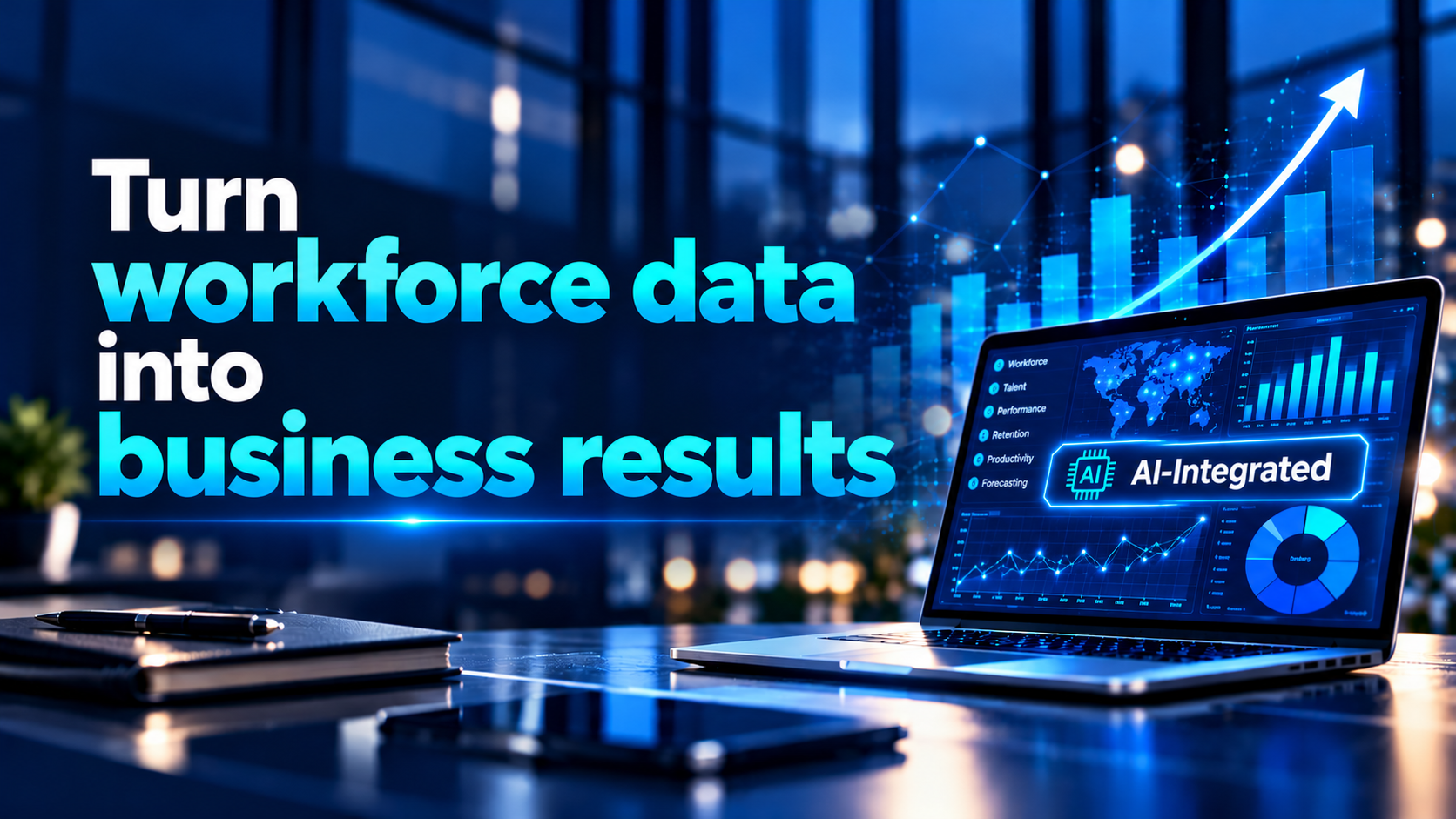
Turn workforce data into business intelligence. Diagnose productivity gaps, improve hiring and retention decisions, forecast workforce needs, and quantify business impact using practical analytics and AI-assisted tools.
Program Architecture
Explore practical People Analytics through an integrated enterprise case—from workforce diagnosis and predictive insights to evidence-based decisions and business impact. Apply your learning in an executive capstone, developing and defending a data-driven workforce strategy.
People Analytics: From Data to Predictive Insight
- Convert raw transactional HR data into quantifiable operational metrics
- Identify recurring workforce variance patterns across teams and locations
- Replace subjective intuition with statistically validated baseline evidence
- Promotion Velocity Diagnostic: Calculate variance between actual Time-in-Grade and enterprise benchmarks across 4 business divisions to uncover departmental promotion bottlenecks.
- Screening Fairness Check: Audit candidate shortlisting pass rates across groups using the Four-Fifths (80%) Rule to detect adverse impact.
Workforce Planning and Capability Forecasting
- Quantify multi-quarter FTE capacity deficits across business units
- Expose capability gaps measured as net workload-to-capacity variances
- Match budgeted FTE capacity with workload and revenue demand ratios
- Net Gap Modeling: Calculate ACPL's 3-year net FTE deficit using workload driver ratios, internal exits, and promotion rates.
- 6B Scenario Prompt: Use AI to model Build vs. Buy talent acquisition strategies to close workforce gaps.
Predictive Recruitment Effectiveness
- Reduce candidate pipeline cycle time and cost-per-hire variances
- Rank sourcing channels by stage-gate conversion and pass-through yields
- Measure new-hire success using a balanced Quality of Hire (QoH) Index Score
- Channel Yield Analysis: Calculate stage-to-stage conversion rates and cost-per-hire across 4 sourcing channels.
- Quality of Hire Index: Compute a 100-point QoH Index using ramp-up days, 90-day performance ratings, and retention data.
Compensation Impact and Pay Equity
- Detect internal pay inequities and salary compression between roles
- Assess whether compensation and bonuses drive expected performance outcomes
- Make smarter, budget-aligned salary and incentive decisions
- Compa-Ratio & Compression Review: Calculate individual compa-ratios and supervisory pay compression ratios across Grade G-05 records
- Equity Adjustment Modeling: Use AI to simulate equitable salary adjustments within a fixed payroll budget.
Performance Drivers for Productivity Improvement
- Quantify performance appraisal variances and rater distribution skews
- Measure productivity differences between top and bottom performers
- Prioritize interventions based on measurable output gains
- Performance Rating Analysis: Examine rating distributions and identify leniency or strictness skews across business units.
- KPI-Rating Alignment: Compare manager appraisal scores against actual KPI achievements to identify performance rating disconnects.
Employee Motivation and Engagement
- Detect early indicators of disengagement through pulse participation and eNPS trends
- Rank workforce drivers by satisfaction and impact scores
- Convert employee comments into measurable sentiment insights
- Engagement Score Analysis: Calculate departmental eNPS scores using pulse survey results and evaluate unit variances.
- AI-Assisted Feedback Analysis: Categorize employee comments, calculate net sentiment, and identify priority operational concerns.
Predictive Employee Retention
- Identify turnover-prone segments by department, tenure, and job band
- Detect leading flight-risk indicators using behavioral warning signs
- Prioritize retention investments using risk-based scoring
- Early Turnover Milestone Analysis: Analyze 30, 90, 180, and 365-day retention trends to locate primary attrition points.
- Flight-Risk Scorecard: Apply a weighted 1-10 risk scorecard and estimate replacement costs for critical flight-risk roles.
From Workforce Data to Business Impact
- Connect workforce indicators directly to EBITDA, revenue per employee, and margins
- Quantify the financial impact of talent shortages, attrition, and onboarding delays
- Model ROI and payback periods for HR interventions
- Financial Cost of Inaction: Quantify losses from hiring delays, voluntary turnover, and operational downtime.
- The 4-Slide Executive Deck: Use AI to build a boardroom-ready narrative linking people interventions to EBITDA.
Workforce Intelligence Executive Capstone
- Forecast 12-month FTE capability deficits and critical flight-risk segments from cross-functional workforce data
- Quantify the commercial cost of inaction and lost productivity on business margins
- Formulate an enterprise 6B workforce strategy and defend the investment proposal before executive leadership
- Executive Business Case & Boardroom Defense:
- Forecast 12-month FTE capability deficits and flight-risk segments
- Calculate the financial cost of inaction on business margins
- Formulate a targeted 6B workforce strategy (Build, Buy, Borrow, Bot, Bounce, Bind)
- Synthesize findings into a 4-slide Boardroom Decision Deck and defend investment proposals, resource trade-offs, and ROI assumptions under C-suite cross-examination
Program Outcomes
By the end of the program, participants will be able to:
- Convert transactional workforce data into reliable operational metrics, baselines, and variance insights.
- Diagnose frontline productivity, crew stability, quality, and attendance patterns while testing alternative explanations.
- Evaluate recruitment channels using conversion, cost, Time-to-Autonomy, performance and retention evidence.
- Assess compensation patterns, pay compression and performance alignment within budget and fairness constraints.
- Interpret performance ratings, engagement signals and employee feedback without overstating causality.
- Analyze tenure-based retention patterns and prioritize critical-role retention using transparent risk and replacement-cost logic.
- Forecast workforce supply, demand, and capability gaps and compare the 6B response options.
- Build a defensible business case covering cost of inaction, intervention cost, expected benefits, ROI or payback, and explicit assumptions.
- Present and defend a concise, evidence-based four-slide workforce intelligence recommendation to executive leadership.
Program Modality
- Faculty-Led Executive Learning: Practical workforce analysis focused on operational and business decision-making.
- Integrated Case-Based Learning: One enterprise case connects the analytical activities across all nine modules.
- Hands-On Analytical Practice: Spreadsheet calculations and accessible AI-assisted analysis, without requiring coding, Python or an IT background.
- Practical Analytical Labs: Data preparation, fairness screening, recruitment-channel analysis, compensation, performance, engagement, retention, and workforce planning.
- Workforce Scenario Modeling: Compare workforce interventions, capability choices and automation trade-offs.
- Reusable Learning Tools: Practical templates, diagnostic scorecards, calculation sheets and AI prompt guides.
- Executive Peer Learning: Interactive problem-solving around real-world HR and business challenges.
- Capstone Application: Develop a four-slide executive business case and defend the recommendation before an executive audience.
AI is used as an analytical assistant for calculations, data preparation, pattern exploration, and scenario analysis. Participants remain responsible for validating outputs, protecting confidential information, and applying appropriate fairness and professional judgment.
Who Should Attend
- Strategic HR Leaders: HR Directors, Heads of HR, HR Business Partners (HRBPs), and Talent Acquisition/OD Leaders looking to drive strategic decisions and influence executive leadership with predictive, business-anchored data.
- Operations & Supply Chain Partners: Plant HR Managers, Factory Operations Leaders, Warehouse Heads, and Supply Chain Managers responsible for frontline productivity, shift stability, and reducing operational waste.
- Workforce & Analytics Professionals: People Analytics Practitioners, Workforce Planners, and HR Operations/Compensation Professionals moving beyond historical reporting and dashboards into predictive modeling and AI-driven decision-making.
Conclusion: From HR Reporting to Strategic Workforce Intelligence
Traditional workforce reporting asks:
“What is our turnover rate? How quickly did we fill vacancies? What was our average engagement score?”
Workforce intelligence asks:
“Where is workforce capacity falling short of demand? Which recruitment channels produce capable employees? Which workforce patterns may be affecting productivity and quality? Where is critical talent at risk? Which intervention is commercially justified—and how will we test whether it worked?”
People Analytics — Predictive Workforce Intelligence equips HR and business leaders to move beyond backward-looking activity metrics, establish reliable workforce evidence, evaluate risks and alternatives, and communicate recommendations in the language of operational performance and business impact.
From People Metrics to Operational Value.
From Descriptive Reporting to Predictive Insight.
From HR Reporting to Evidence-Based Business Decisions.
Certification Awarded

Certification Requirements
To earn the Certificate of Completion, participants must actively participate in all eight modules, complete the required analytical exercises and case workshops on the Case Company Consumer Goods case, and successfully present the Capstone Workforce Intelligence Diagnostic Project, demonstrating practical capability in measuring, modeling, analyzing, and presenting workforce intelligence to senior leadership.